


A quick online prescription can leave important health details out of the decision. The risks of buying hormones online include medicines with incorrect or missing ingredients, unsuitable doses, and products that may interact with other medicines or foods. Without appropriate medical monitoring, side effects or delayed treatment can also become harder to address.
It’s understandable to want clear, timely support for changes that matter to your body and sense of self. A brief online assessment may not account for your medical history, existing conditions, or other medicines, so knowing what to do if something feels wrong is part of safer care.
This article explains the risks of unsupervised prescriptions, quick online prescribing, and potentially unsafe products. It also outlines how health care professionals can help if problems arise, and what to do if you experience an unwanted effect or suspect a product isn’t what it claims to be.
Key Takeaways
- Learn why prescription hormones need appropriate medical oversight, including attention to your health history and other medicines.
- Understand how a rushed online assessment can miss important details that affect whether a treatment is suitable.
- Recognize warning signs of a questionable product, such as missing or misleading information, and know when to seek professional help.
- Explore how Transfemme’s nonprescription offerings may support appearance goals, while keeping them distinct from prescription hormone therapy.
Risks of taking prescription medicines without medical supervision
In the United States, obtain prescription hormones through medical care and a valid prescription, not an unregulated seller. Whether an online purchase is lawful depends on the medicine and circumstances. Costs vary with the medication, clinical visits, insurance, and monitoring, so there is no single typical total.
Prescription medicines contain potent ingredients. Taking hormones at an unsuitable dose or combining them with other medicines or foods can increase the chance of an adverse reaction. Reported serious complications include blood clots, strokes, and pulmonary emboli. A doctor also needs to consider your medical history: hormone therapy may not be advised for people with elevated breast cancer risk, heart disease, or a history of clots or stroke.
Before treatment, discuss your health history, current medicines, and concerns with a doctor. Follow-up lets the clinician review your response and address side effects. Appropriate tests and monitoring depend on the hormone and your circumstances; there is no single schedule that suits everyone.
When using an online pharmacy or telehealth service, look for a valid prescription and meaningful medical review, not instant access without questions. The FDA’s BeSafeRx resources offer guidance on safer online pharmacy purchases. A brief assessment that overlooks your medical history may miss information that affects whether treatment is suitable.
If an overseas listing offers prescription hormones without asking about a prescription or your medical history, don’t mistake quick access for proof of safety. Avoid taking a product if its source or contents are unclear. Keep the listing and order details, and discuss them with a doctor or pharmacist before deciding what to do. If you’ve already taken it and feel unwell, seek medical advice promptly.
Consulting health care professionals
A health care professional can help relate hormone treatment decisions to your symptoms, goals, and medical history. For people going through perimenopause or menopause, physicians describe hormone therapy as generally safe and effective for many. That doesn’t make it right for everyone. Discussing potential benefits and drawbacks can help you decide whether it fits your circumstances.
Prepare for the conversation by noting your symptoms, when they occur, and how they affect daily life. Include current medicines and relevant health conditions, and explain what changes you hope treatment may support. For example, describe hot flashes, night sweats, or disrupted sleep, then ask how hormone therapy could address them.
Ask the health professional to explain the proposed treatment’s purpose, possible side effects, and follow-up. You can also ask how your medical history affects the decision and what alternatives may be considered. Clear answers help you understand the reasoning behind a plan instead of relying on online claims or assumptions.
Keep expectations grounded. Physicians say hormone therapy isn’t a cure-all: it doesn’t cause weight loss or restore someone’s face or body to that of a 20-year-old. If weight change or appearance is your main goal, say so directly. That allows the conversation to distinguish those aims from symptoms hormone therapy may help manage.
Your preferences and circumstances matter, too. Ask how progress will be reviewed, what changes should prompt follow-up, and whom to contact with concerns. If you leave an appointment with unanswered questions, request clarification before deciding. A respectful discussion gives you room to explain what matters and make an informed choice without feeling rushed or judged.
Dangerous, counterfeit, or expired products
An online listing may look professional even when the product differs from its description. Medicines from unfamiliar sources may be counterfeit, substandard, expired, or unsuitable for the person receiving them. A hormone product could contain banned or dangerous additives, or have missing or incorrect active ingredients. Packaging alone cannot establish that its contents are safe or effective.
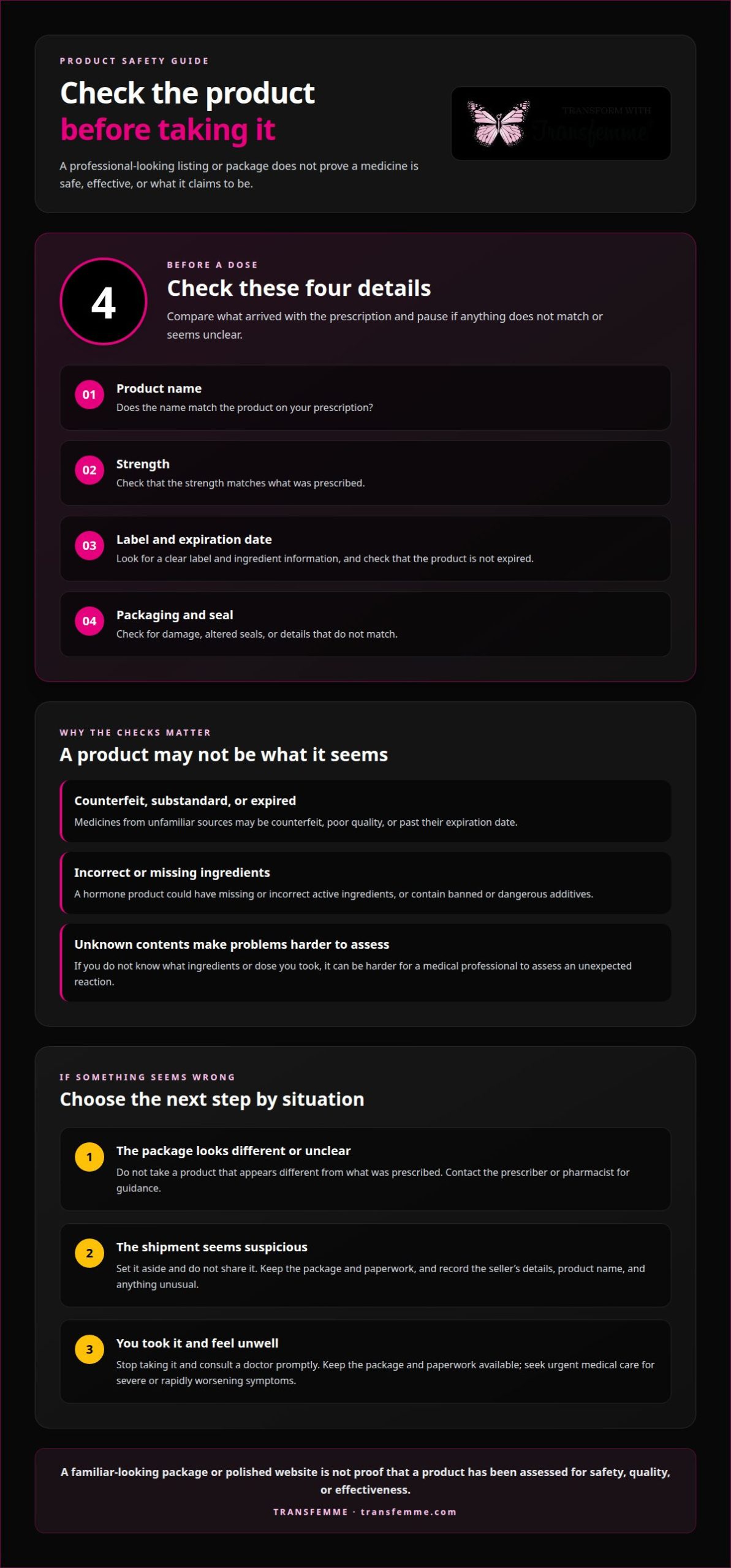
Check the package before taking anything. Compare the product name and strength with the prescription, then inspect the label, expiration date, and packaging for damage or mismatched details. A missing label, unclear ingredient list, altered seal, or expired date is a reason to pause. Don’t take a product that appears different from what was prescribed; contact the prescriber or pharmacist for guidance.
Unauthorized products may be mislabeled, recalled, expired, or counterfeit versions of authorized medicines. This is more than a quality concern: you may not know what dose or ingredients you’re taking, making an unexpected reaction harder to assess. Unlicensed medical devices can also be low quality, ineffective, or unsafe. A polished website or familiar-looking package doesn’t prove that a product has been assessed for safety, quality, or effectiveness.
If you’ve taken a product and develop an allergic reaction or unwanted side effect, stop taking it and consult a doctor promptly. Keep the package and any accompanying paperwork available. The product name, label, and expiration date can help the medical professional assess what happened. Seek urgent medical care for severe or rapidly worsening symptoms. Don’t restart the product or substitute another online medicine without professional advice.
If a shipment seems suspicious, set it aside and don’t share it with anyone. Record the seller’s details, product name, and anything unusual, then discuss those facts with a doctor or pharmacist. This can help distinguish a packaging concern from a possible medication problem and guide a safer next decision.
Risks of quick online prescribing
A short online assessment can feel efficient, but speed alone doesn’t show whether the decision reflects your health needs. A hormone prescription requires relevant details, including your medical and family history, current medicines, treatment goals, and possible risk factors. If those details are skipped, a clinician may miss information that changes the treatment decision.
Online and in-person hormone care differ in how appointments happen, not in the need for careful assessment. Remote care can make discussion more accessible, while an in-person appointment allows face-to-face evaluation. Either way, the prescriber needs enough information to assess suitability, explain the plan, and arrange follow-up. A licensed pharmacy dispenses medication; it doesn’t replace clinical assessment.
A Philadelphia OB-GYN described a patient who received estrogen and progesterone through an online visit despite medical and family history that should have ruled out their use. The example shows why a quick questionnaire can be inadequate if it doesn’t explore relevant history. A prescription issued after limited review may leave a patient with treatment that conflicts with important health information.
Before accepting a prescription, make sure the discussion covers your current medicines, relevant conditions, family history, and reason for treatment. Explain your symptoms and goals, and ask how the prescriber will review your response. If a form asks only a few questions and offers medication without discussing your history or follow-up, those gaps deserve attention.
Convenience shouldn’t mean losing the chance to ask questions. A careful visit leaves room to clarify the proposed treatment, possible unwanted effects, and what to do if concerns arise. When utilizing telehealth, platforms like Aussie Scripts show how digital healthcare services can balance convenience with proper medical consultations. Keep a record of the prescription and instructions, and share them with health professionals involved in your care. What matters is whether the process supports an informed medical decision, not whether the appointment is online or in person.
Transfemme
Transfemme offers nonprescription products for people exploring feminine appearance goals, including specialized creams, pills, and bundles. These products are distinct from prescription hormone therapy and don’t replace medical assessment, prescriptions, or follow-up. If you’re concerned about an online hormone prescription or an unexpected reaction, speak with a health care professional. Transfemme products aren’t intended to treat medication-related problems.
For appearance-focused goals, options include the Boobie Bundle, ALLYOU2GO Bundle™, Transfemme® Pills, and Transfemme Cream Pack. Some offerings are designed to support breast enhancement, skin softening, or body hair reduction. Consider whether these goals match what you’re looking for, and keep prescription treatment decisions separate from product choices.
If you have questions about Transfemme’s offerings, contact Transfemme.
Choose a next step that fits your goals
If you’re weighing the risks of buying hormones online, take time to make a decision that reflects your health and personal goals. Prescription treatment decisions belong in a medical conversation, where your history and concerns can be considered. For appearance-focused goals, explore whether Transfemme’s products are relevant to what you’re seeking, without treating them as a substitute for prescribed care.
You don’t need to have every question settled before exploring product options. Share what you hope to achieve and what you’d like to understand; a thoughtful next step can begin with a clear, direct conversation. Your choices deserve care, respect, and room to be considered at your own pace.
Contact Transfemme for support with questions about its offerings, and keep moving toward choices that feel right for you.
Frequently Asked Questions
What Can You Do When Problems Arise?
Pause before taking another dose if a product or prescription raises concerns, and contact a doctor or pharmacist for advice. Keep the packaging, order confirmation, and prescription details together so you can describe exactly what you received and took. Note when symptoms began and any other medicines used around that time. This record can help a health professional assess what to do next.
What are the health risks of buying hormones online without medical supervision?
The risks of buying hormones online without medical supervision include taking the wrong dose, using a product with unexpected ingredients, or missing a serious interaction. Hormones may also be unsuitable given your medical history. Serious complications associated with inappropriate hormone use can include blood clots, stroke, or pulmonary emboli. A clinician can assess your individual health factors and help determine whether symptoms need prompt attention.
How can you tell if hormones bought online are counterfeit, contaminated, or incorrectly dosed?
You often can’t confirm a medicine’s contents by appearance alone. Warning signs may include a broken seal, inconsistent labeling, missing ingredient details, or packaging that differs from the prescription. Don’t taste or take a product to test it. Keep the item and its packaging, note where it came from, and show these details to a pharmacist or doctor for guidance.
What should you do if you have already taken hormones bought online and feel unwell?
Contact a doctor or poison-control service promptly and explain what you took, how much, and when. Keep the container nearby, and share details of other medicines or supplements you use. For severe or rapidly worsening symptoms, seek emergency medical care now. Don’t take another dose or try to counteract the effects with a different medicine unless a health professional directs you.
What side effects and drug interactions can occur with commonly purchased hormones?
Taking hormones at an unsuitable dose or combining them with other medicines or foods can increase the chance of an adverse reaction. Reported serious complications include blood clots, strokes, and pulmonary emboli.