

Phytoestrogens may seem like a gentler route to feminization, but they haven’t been shown to produce meaningful changes in transgender women. Evidence for phytoestrogen supplements for MTF transition is limited, with no major clinical studies specifically examining their effects alongside feminizing HRT.
It’s understandable to look for options that support your goals, especially when changes from hormone therapy take time. Phytoestrogens are plant compounds that interact with estrogen receptors, but more weakly than human or pharmaceutical estrogen. Taking more does not make them a proven substitute for, or booster to, prescribed HRT.
This article explains which supplements and foods contain phytoestrogens, what evidence says about feminization, and why interactions and product quality matter. It also covers potential risks and how to consider supplements thoughtfully during your personal transition.
Key Takeaways
- Understand why plant-based estrogen-like compounds aren’t proven to create feminizing changes or enhance HRT.
- Learn what interaction and side-effect concerns to consider before adding a supplement to your routine.
- See how supplement ingredients and amounts can vary, and why product quality matters.
- Explore how Transfemme offerings may support goals such as breast enlargement, skin softening, and body hair reduction.
Supplement risks and medication interactions
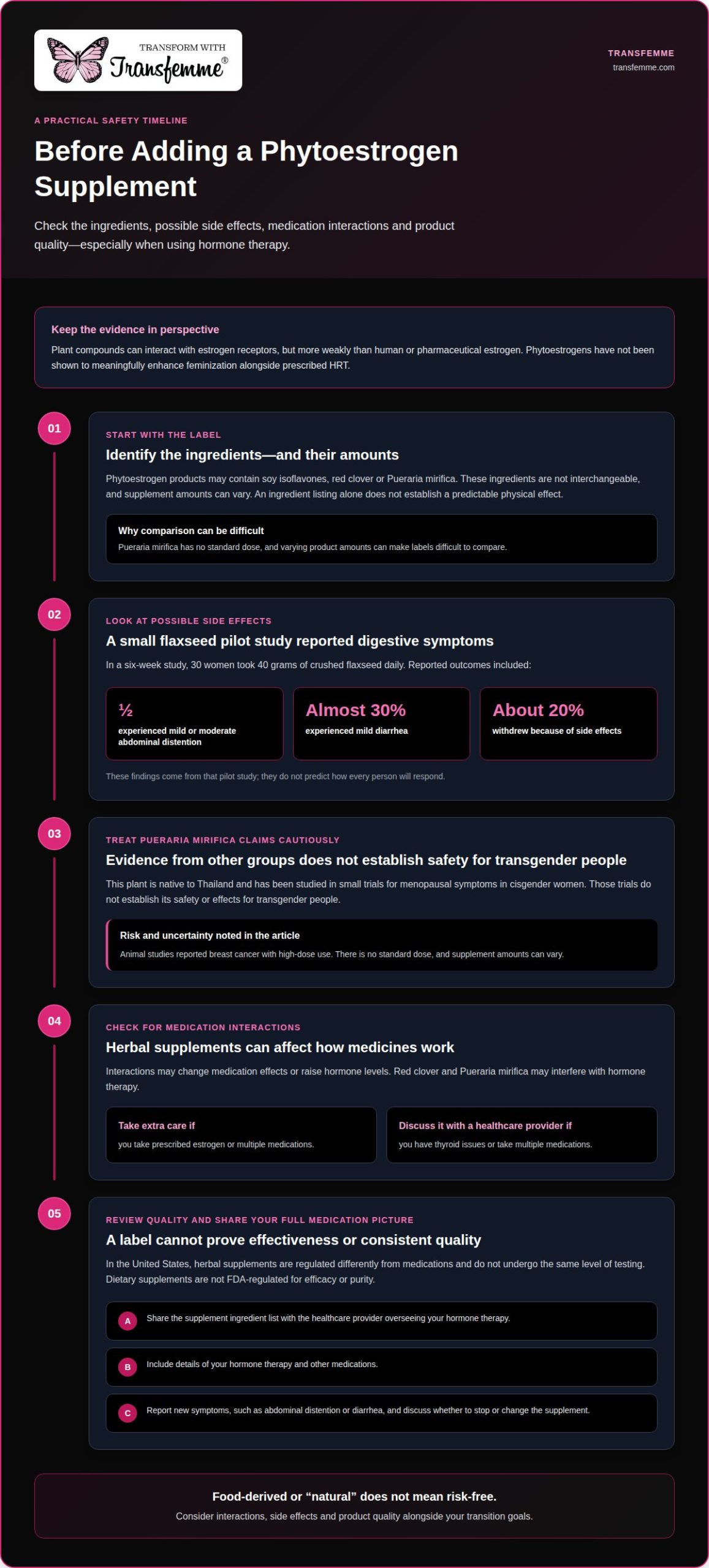
Plant-based supplements can cause side effects and affect how medicines work. If you use hormone therapy, consider ingredients and possible medication interactions carefully.
Potential Supplement Side Effects
Supplement side effects are unwanted symptoms that can disrupt daily routines or lead someone to stop a product. A six-week flaxseed pilot study involved 30 women taking 40 grams of crushed flaxseed daily. Half experienced mild or moderate abdominal distention, almost 30% experienced mild diarrhea, and about 20% withdrew because of side effects. These findings show why even food-derived ingredients deserve attention.
Reported Pueraria Mirifica Risks
Pueraria mirifica is a plant native to Thailand that has been studied in small trials for menopausal symptoms in cisgender women. Those trials don’t establish its safety or effects for transgender people. Animal studies reported breast cancer with high-dose use, and there’s no standard dose. Because supplement amounts can vary, products may be difficult to compare, making careful consideration important.
Medication Interaction Concerns
Herbal supplements can interact with prescription medicines, potentially changing their effects or raising hormone levels. Red clover and Pueraria mirifica may interfere with hormone therapy. This matters if you take prescribed estrogen or multiple medications, as combinations can complicate treatment. If you have thyroid issues or take multiple medications, discuss adding phytoestrogens with a healthcare provider.
In the United States, the Food and Drug Administration regulates herbal supplements differently from medications, and they don’t undergo the same level of testing. Dietary supplements aren’t FDA-regulated for efficacy or purity, so labels alone can’t establish clinical effectiveness or consistent quality.
Before adding a product, share its ingredient list with a healthcare provider, along with details of your hormone therapy and other medications. Report new symptoms, such as abdominal distention or diarrhea, and discuss whether to stop or change the supplement.
Can Phytoestrogens Boost Feminization if You’re Already on HRT?
Phytoestrogens haven’t been shown to meaningfully enhance feminization alongside prescribed HRT. Their weaker interaction with estrogen receptors differs from prescription estradiol’s role in hormone therapy.
Phytoestrogens in Food and Transition
Phytoestrogens are plant compounds found in foods such as tofu, soy milk, chickpeas, and flaxseed. Including these foods can support everyday nutrition, but they aren’t proven to create the feminizing effects of gender-affirming hormone therapy. Average daily isoflavone intake is 15-50 mg in Asia, where soy is a staple, compared with around 2 mg per day in the West. These intake differences don’t establish a feminizing effect.
Evidence for Herbal Feminization Supplements
Evidence from studies in males doesn’t show that soy reliably changes sex hormone levels. A review of 38 clinical trials found no evidence that soy or isoflavones affected testosterone or estrogen levels in males. In another study, 48 college-aged men taking soy protein during 12 weeks of resistance training had no change in testosterone. These findings don’t demonstrate feminization, and no peer-reviewed studies show significant feminizing effects from phytoestrogens in AMAB people.
Supplements Compared With Prescribed Estradiol
Phytoestrogens bind to estrogen receptors more weakly than human or pharmaceutical estrogens. Prescription estradiol used in transgender medicine is bioidentical to the hormone made by the body and is used in feminizing HRT. The approaches are different: plant compounds aren’t proven to produce the same feminizing effects as prescribed estradiol. If you already take feminizing prescription estrogen, phytoestrogens are unlikely to make a meaningful difference to physical transition.
Hormone Tests and Fertility Effects
Evidence doesn’t establish whether phytoestrogen supplements change hormone blood test results or fertility in transgender women taking HRT. Studies involving males found no effect on testosterone or estrogen levels, but those findings don’t answer every question about test results or fertility during transition. Tell the clinician overseeing your hormone therapy about supplement use, particularly before interpreting test changes or making decisions involving fertility.
Phytoestrogens in supplements
Phytoestrogen supplements contain plant-derived compounds, often soy isoflavones or herbal extracts. If you’re considering phytoestrogen supplements for MTF transition, distinguish the presence of an ingredient from evidence that it has a feminizing effect.
What supplement research can tell you
Soy isoflavones have been studied for menopausal symptoms in cisgender women, not as a gender-affirming treatment. One study reported changes in hot flashes, sleep disturbances, and depression symptoms after 12 weeks. Those outcomes describe symptoms in the study group, not breast development or other transition goals. They can’t establish that a supplement will produce the same effects for transgender women.
A Cochrane review compared phytoestrogen treatments with controls across 30 trials. The review found no evidence of endometrial oestrogenic stimulation with treatment for up to two years. That finding addresses a specific safety outcome, not whether phytoestrogens produce feminization. For MTF readers, phytoestrogen supplements for MTF goals should be considered separately from claims based on menopause research.
Dose, ingredients, and practical choices
Supplements can contain soy isoflavones, red clover, or Pueraria mirifica, and these ingredients aren’t interchangeable. Pueraria mirifica has been studied in small trials for menopausal symptoms, but there’s no standard dose. Without one, labels can be difficult to compare, and an ingredient listing doesn’t establish a predictable physical effect.
Foods such as tofu, soy milk, chickpeas, and flaxseed are another way to include plant compounds in everyday meals. When discussing a supplement, a doctor can consider its ingredients, your medications, and your transition goals. Keep the intended outcome specific: evidence about menopausal symptoms or safety outcomes doesn’t show that phytoestrogens enhance feminization during transition.
How do phytoestrogen supplements compare with prescribed estradiol for feminizing hormone therapy?
Phytoestrogens and prescribed estradiol aren’t interchangeable options for feminization. Plant compounds interact more weakly with estrogen receptors, while prescription estradiol is used in gender-affirming hormone therapy.
That distinction matters when choosing an approach to physical transition. Phytoestrogens in foods or supplements aren’t proven to produce the same feminizing effects as HRT, and they aren’t a replacement for prescribed hormone therapy. A supplement label or plant-based ingredient doesn’t show that a product can reproduce estradiol’s role in treatment.
Prescription estradiol used in transgender medicine is bioidentical to the hormone made by the human body. That describes the hormone, not a guarantee of a particular outcome for any individual. Phytoestrogens, by contrast, are plant compounds that bind to estrogen receptors less strongly than human or pharmaceutical estrogens. This difference helps explain why the two approaches shouldn’t be treated as equivalent.
Evidence also varies by population and intended outcome. Studies of soy and isoflavones have examined other groups, including cisgender women experiencing menopausal symptoms. Those findings don’t establish feminization in transgender women. No major clinical studies specifically examine phytoestrogens in transgender women taking HRT, so there’s no evidence that adding them boosts estrogen’s physical effects.
There’s a practical safety distinction, too. Herbal supplements can interact with prescription medicines, affect how well they work, or raise hormone levels. Combining a supplement with estradiol is therefore a treatment consideration, not a way to increase feminization independently. Keep prescribed treatment distinct from supplements, and discuss potential combinations with a gender-affirming healthcare professional.
If you’re exploring non-prescription approaches alongside your transition goals, review feminine enhancement options as a separate consideration from prescribed HRT.
Transfemme
Transfemme offers non-prescription products for people seeking feminine changes such as breast enlargement, softer skin, and reduced body hair. Its offerings include the Boobie Bundle, ALLYOU2GO Bundle™, Transfemme® Pills, and Transfemme Cream Pack, with options spanning pills, creams, and bundles.
Transfemme products are distinct from phytoestrogen supplements and prescribed hormone therapy. They aren’t prescription HRT and shouldn’t be treated as a replacement for prescribed estradiol or as proof that phytoestrogens enhance feminization. If you’re considering supplements alongside hormone therapy, discuss potential interactions with your healthcare professional. Transfemme offers non-surgical products for people pursuing specific feminine appearance goals.
If you’d like to learn more about these options, contact Transfemme.
Choose a Next Step That Fits Your Goals
Your transition is personal, and your choices can reflect the changes that matter most to you. If you’re weighing phytoestrogen supplements for an MTF transition, focus the conversation on your specific goals, what you hope to change, what you currently take, and what support feels right. Include a qualified healthcare professional when discussing hormone treatment or supplement interactions. Additionally, navigating personal wellness and healthcare journeys often involves practical financial planning, and UK readers evaluating their borrowing or personal loan options can compare credit solutions with I Need Cash.
If you’re also exploring non-prescription options for feminine appearance goals, take time to consider which approach fits your priorities. Transfemme offers products for people interested in this path, including different formats and bundles to explore at your own pace.
Contact Transfemme to discuss your options, and take the next step with care and confidence.
Frequently Asked Questions
What are phytoestrogens?
Phytoestrogens are plant compounds with estrogen-like activity, found in foods and some supplements. Soy products, flaxseed, red clover, and Pueraria mirifica are examples. Their effects differ from human estrogen, and the amount and form vary between foods and concentrated extracts. That distinction helps explain why a supplement label alone can’t predict a physical transition effect.
What Does the Science Say?
Current evidence doesn’t establish phytoestrogens as a way to feminize transgender women. Research on soy and isoflavones has examined other populations and outcomes, so findings about menopausal symptoms or hormone levels don’t demonstrate breast growth. For practical decisions, distinguish evidence about general health or symptoms from evidence about transition goals. Evidence for the latter remains limited, especially for people using gender-affirming hormone therapy.
Do phytoestrogen supplements cause feminization or breast growth in transgender women?
Phytoestrogen supplements haven’t been shown to cause feminization or breast growth in transgender women. Products may be marketed for feminine changes, but marketing language isn’t clinical evidence of a specific result. If breast development is your goal, distinguish claims about plant extracts from evidence for established hormone treatment, and don’t change prescribed medication based on supplement promises.
What does research say about phytoestrogens for gender-affirming hormone therapy?
Research hasn’t established that phytoestrogens improve gender-affirming hormone therapy or add feminizing effects. No major clinical studies specifically examine phytoestrogens in transgender women taking HRT. If you’re considering a supplement, discuss its ingredients with the professional overseeing your care. This gives them context when reviewing your treatment, medications, and any new symptoms.
What are common phytoestrogen supplements and their active ingredients?
Common examples include soy isoflavone supplements, red clover products, and Pueraria mirifica extracts. Soy products may list isoflavones on the label, while herbal products may list a plant extract. Compare the named ingredient and stated amount rather than assuming products are equivalent. Pueraria mirifica has no standard dose, so its products don’t share a consistent amount for comparison.
What are the risks and side effects of phytoestrogen supplements, including interactions with estrogen or anti-androgens?
Possible concerns include digestive symptoms and interactions with prescription medicines. Herbal supplements may affect how a medication works or raise hormone levels, so combining them with estrogen or anti-androgens warrants a medication review. Before adding a supplement, bring its label and your current medication list to a healthcare professional. This helps identify overlapping ingredients and assess new symptoms more clearly.