Herbs may offer comfort or personal meaning, but they haven’t been proven to create the feminizing effects of gender-affirming hormone therapy. For people exploring natural feminization without HRT, that distinction matters: feeling supported is valuable, but it is different from a demonstrated change in hormone levels or physical traits.
It makes sense to seek options that feel accessible and aligned with your goals, especially if you’re looking for relief from gender dysphoria or hoping to change your appearance. Herbal supplements marketed for feminization can sound promising, but their claims deserve careful consideration. “Natural” doesn’t automatically mean effective or risk-free.
This article explains what herbal remedies may and may not do for gender dysphoria, what evidence and safety concerns surround supplements marketed for feminization, and what to consider before trying them on your own. It also covers how to clarify your goals and when talking with a gender-affirming healthcare professional may help you make an informed decision.
Key Takeaways
- Separate emotional comfort from physical changes when considering herbal remedies, and look closely at what the evidence supports.
- Before trying a supplement, consider its ingredients, possible medication interactions, and the limits of supplement testing in the United States.
- Discuss herbs and supplements with a gender-affirming healthcare professional, especially if you take prescription medication or have health concerns.
- Explore Transfemme’s offerings in light of your personal goals, such as breast enhancement or softer-feeling skin.
1. Self-directed herbal treatment before hormone therapy
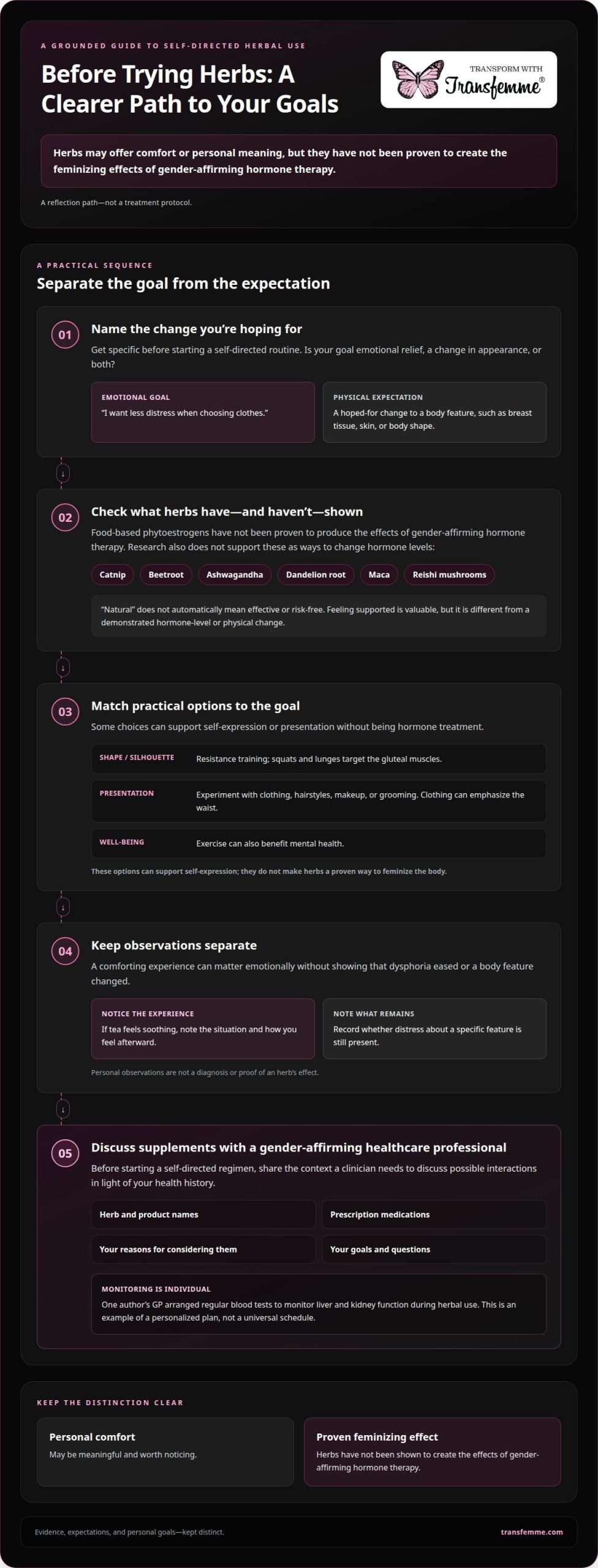
Herbs can seem like an accessible first step while you consider hormone therapy, but they aren’t an evidence-based substitute for its feminizing effects. Food-based phytoestrogens haven’t been proven to produce the effects of gender-affirming hormone therapy. Research also doesn’t support catnip, beetroot, ashwagandha, dandelion root, maca, or reishi mushrooms as ways to change hormone levels.
One personal account illustrates the difference between emotional comfort and physical change. The author began a transgender herbal remedy regimen in December 2017 while waiting for gender-affirming care. After about a year, the author described modest benefits, mainly psychological. That experience may explain why someone tries herbs, but it doesn’t establish that a supplement changes hormone levels or reliably relieves gender dysphoria.
Non-HRT options and hormone therapy differ in the changes they can support: herbs aren’t proven to produce the feminizing effects of gender-affirming hormone therapy. Exercise, clothing, makeup, and grooming can help you express your gender or shape your presentation, but they aren’t hormone treatment. For example, squats and lunges target the gluteal muscles, while clothing can emphasize the waist.
While waiting to discuss hormone therapy, separate personal goals into steps that don’t depend on changing hormone levels. If you want a different silhouette, you might try resistance training; if presentation is your focus, experiment with hairstyles or makeup. Exercise can also benefit mental health. These choices can support self-expression, but they don’t make herbs a proven way to feminize the body.
Discuss feminizing hormones and supplements with a gender-affirming healthcare professional before starting a self-directed regimen. Bring the names of each herb, product, and prescription medication, along with your reasons for considering them. This information helps the clinician discuss possible interactions in light of your health history. One author’s GP arranged regular blood tests to monitor liver and kidney function during herbal use, illustrating why monitoring may be part of a personalized plan.
Professional monitoring also matters when hormone therapy begins. A healthcare professional can review your goals, health history, and response over time, rather than treating a supplement as an equivalent substitute. If you’re waiting for an appointment, keep a record of products you take and questions you want answered. A clear list can make the discussion more focused when care becomes available.
If you’re considering herbs, write down the specific change you hope to see and how you’ll distinguish it from emotional comfort. For example, separate a goal about appearance from a goal about coping with a difficult day. Bring your notes and product labels to a gender-affirming healthcare professional. This gives the conversation practical context without assuming a supplement will produce a particular result.
2. Herbal remedies and gender dysphoria
Gender dysphoria can involve distress about different parts of someone’s body or social experience. One person may feel discomfort about their chest; another may focus on their voice, name, or pronouns. An herbal routine might feel like a way to take action, but that feeling alone doesn’t establish that dysphoria has eased.
One author described beginning herbs to try to alleviate gender dysphoria. That intention matters as a personal account, but it isn’t proof that herbs treat dysphoria or cause physical feminization. Keep the questions separate: “Did this routine feel comforting?” is different from “Did it change the physical feature causing distress?”
This distinction can make personal observations more useful. If herbal tea feels soothing in a difficult moment, note the situation and how you feel afterward. If distress about a specific feature remains, record that too. A comforting experience can matter emotionally without showing that the underlying concern or body feature has changed.
Describe your goal in concrete terms before starting any self-directed routine. For example, “I want less distress when choosing clothes” is more specific than “I want to feel more feminine.” The first identifies an experience to reflect on; the second could mean different things, from appearance to belonging or self-expression.
A written record can also help distinguish emotional shifts from physical expectations. Note which situations feel difficult, what you hoped an herb would change, and what you actually notice over time. If your goal is to feel more at ease getting dressed, track that separately from hopes about breast tissue, skin, or body shape. These observations aren’t a diagnosis or proof of an herb’s effect.
Bring the herb’s name and your notes to a gender-affirming healthcare professional. Explain whether you’re seeking emotional relief, physical change, or both. The conversation can help separate support for dysphoria from expectations about a supplement, while giving the clinician context about the products you use and the concerns you want addressed.
Gender-affirming support doesn’t require one particular presentation or transition path. You might choose clothing, grooming, or a name that feels more comfortable, while someone else may have different priorities. These choices can support self-expression, but they aren’t a test of identity. Consider herbs separately from personal choices and clinical care.
If distress feels difficult to manage, describe specific moments to a healthcare professional, such as avoiding a mirror or feeling uncomfortable in a changing room. Clear examples are more useful to discuss than a broad hope that herbs will work. Your identity remains valid whether or not a supplement changes how you feel.
3. Herbal supplements marketed for feminization
Supplement claims often focus on plant compounds, but a plant-based label doesn’t establish feminizing effects. Pueraria mirifica, for example, hasn’t been studied in transgender people. Small studies have examined it for menopausal symptoms in cisgender women—an area focused on by supplement makers like evabiotic.com—but they don’t show that it works for feminization in transgender people.
Claims about phytoestrogens can also obscure the amount involved. Some approaches would require eating a pound of powders or seeds, rather than adding a tablespoon to a smoothie. This illustrates why a familiar food ingredient and a concentrated supplement aren’t interchangeable. Neither establishes that a product will produce a desired physical change. For individuals who are instead managing midlife hormonal changes such as perimenopause or menopause, functional medicine practices like Living Well Dallas offer comprehensive care and consultations.
Reported concerns about Pueraria mirifica include anemia, chest pain, and palpitations. High-dose use caused breast cancer in animal studies. Animal findings don’t establish the same effect in people, but they are a reason to treat high-dose claims cautiously rather than assume a botanical ingredient is harmless.
Supplement oversight also differs from medication oversight. According to the U.S. Food and Drug Administration, herbal supplements in the United States are regulated under different rules from medications and don’t undergo the same level of testing. A label may not reflect the amount of product in a supplement. How a product is made can also change its potency or active ingredient.
Other concerns include interactions with prescription medications and contamination with heavy metals or other substances. Before considering a product, write down its full ingredient list and serving directions, as well as any medicines you take. Share that information with a gender-affirming healthcare professional so possible interactions are part of the discussion, rather than treating a supplement as separate from your care.
Treat a label as a starting point, not proof of effectiveness. A product marketed for feminization may lack evidence that it changes hormone levels or produces a particular physical result. Keep your goal specific, such as breast appearance or skin feel, and distinguish it from claims about hormone changes. If an advertisement promises broad effects from one botanical ingredient, compare each claim with the limited evidence described above.
For appearance-focused options beyond herbal supplements, explore feminization products while keeping supplement claims separate from evidence about hormone therapy. If you’re considering any herbal product, discuss its ingredients and your medications with a gender-affirming healthcare professional first.
Transfemme
Transfemme offers non-prescription options for people exploring appearance-focused changes without HRT. Its offerings include the Boobie Bundle, ALLYOU2GO Bundle™, Transfemme® Pills, and Transfemme Cream Pack. These products are intended to support goals such as breast enhancement, softer-feeling skin, and reduced body hair.
If you’re exploring products that align with your goals, keep expectations grounded: herbal supplements and creams aren’t prescription hormone therapy and aren’t proven substitutes for it. Transfemme offers products such as Transfemme Pills and Transfemme Male Breast Cream for people exploring breast appearance or broader feminization goals. These products have not been evaluated by the FDA and are not intended to diagnose, treat, cure, or prevent any disease.
If you’d like to explore whether Transfemme’s offerings fit your goals, contact Transfemme for more information.
Choose the next step that fits your goals
Choosing natural feminization without HRT starts with identifying which changes matter most to you, then deciding what kind of support feels appropriate. You don’t need to follow someone else’s timeline or define your identity through a particular product or appearance. A clear personal goal can help you consider options carefully and keep expectations grounded.
For appearance-focused goals, Transfemme offers the Boobie Bundle, ALLYOU2GO Bundle™, and Transfemme® Pills. Consider how those offerings relate to what you hope to address, and keep your wellbeing central as you make decisions. If you’re unsure what feels like a useful next step, you can start a conversation about your options.
Contact Transfemme to discuss your options. Your path is personal, and each thoughtful choice can bring you closer to expressing yourself in a way that feels right.
Frequently Asked Questions
Do Herbal Remedies Work For Gender Dysphoria?
Herbal remedies haven’t been shown to treat gender dysphoria or reliably change hormone levels. Tea or a supplement may feel calming as part of a routine, but that experience doesn’t show it has changed the source of distress. If you try an herb, note your mood and the situations that affect your dysphoria separately, then share those observations and the product’s ingredients with a healthcare professional.
How Can I Feminize My Body Without Hormones?
You can shape your presentation without hormones through clothing, grooming, and exercise. For example, resistance training can build muscle, while clothing can emphasize particular proportions. A hairstyle, makeup, or eyebrow shaping may also help you express your desired look. These approaches affect presentation or muscle development, not hormone levels. Choose changes based on what feels affirming to you, rather than treating any single look as necessary.
What Does Natural Feminization Without HRT Mean?
The phrase natural feminization without HRT usually refers to pursuing a more feminine appearance or expression without prescription hormone therapy. It can include clothing, makeup, hairstyle, or exercise. The word “natural” doesn’t establish that a supplement is effective or risk-free. A plant-based capsule is still a supplement, and its claims should be considered separately from evidence about hormone therapy.
Which Non-Hormonal Methods Can Create a More Feminine Appearance?
Non-hormonal options include styling and body-presentation techniques, rather than changes to hormone levels. You might try a hairstyle that frames your face, makeup that highlights features you enjoy, or clothes that create a silhouette you prefer. Some people also use tucking to create a flatter appearance under clothing. These are personal choices, not requirements, and each can be adapted to your comfort.
Can Exercise or Diet Change Body Shape in a Gender-Affirming Way Without HRT?
Exercise can help develop particular muscles and may influence your silhouette. For instance, squats and lunges target the gluteal muscles, while resistance training can build lean muscle. The results depend on the muscles exercised and your routine; they don’t reproduce hormone therapy’s feminizing effects. Choose an activity you enjoy and can sustain, and avoid assuming a particular diet will create a specific gendered body shape.
What Are the Risks of Supplements or Products Marketed for Natural Feminization?
Risks include interactions with prescription medicines, inaccurate label amounts, and possible contamination with heavy metals or other substances. The U.S. Food and Drug Administration regulates supplements differently from medications, and they don’t undergo the same level of testing. Pueraria mirifica has also been associated with reports of anemia, chest pain, and palpitations. Share product ingredients with a healthcare professional before use.