


DIY HRT cannot be assumed safe: taking estrogen or testosterone without medical guidance and routine monitoring can expose you to uncertain doses, unsuitable medication, and side effects that may go unnoticed. Understanding why DIY HRT can be dangerous is not about judging your choices. Access barriers and the desire to feel more at home in your body can make self-directed hormones seem like the only option.
If you’re already taking hormones, you deserve practical, non-judgmental information, not shame. This article explains the risks of unregulated or self-adjusted medication, the physical and emotional changes that need attention, and why monitoring matters. You’ll also learn what information to share with a healthcare professional and which symptoms call for urgent medical care. The goal is to help you understand what may be happening and consider safer next steps while respecting your identity and decisions.
Key Takeaways
- Learn why taking more estrogen or testosterone doesn’t mean faster results, and what risks can come with uncertain medication or dosing.
- Understand which side effects and health changes may need monitoring, including those associated with anti-androgens such as spironolactone.
- Find ways to share your medication, dose, timing, and supplement information with a healthcare professional without judgment.
- See why testosterone-related increases in red blood cells matter and how monitoring can help inform safer care.
What if I’m already taking DIY estrogen or testosterone?
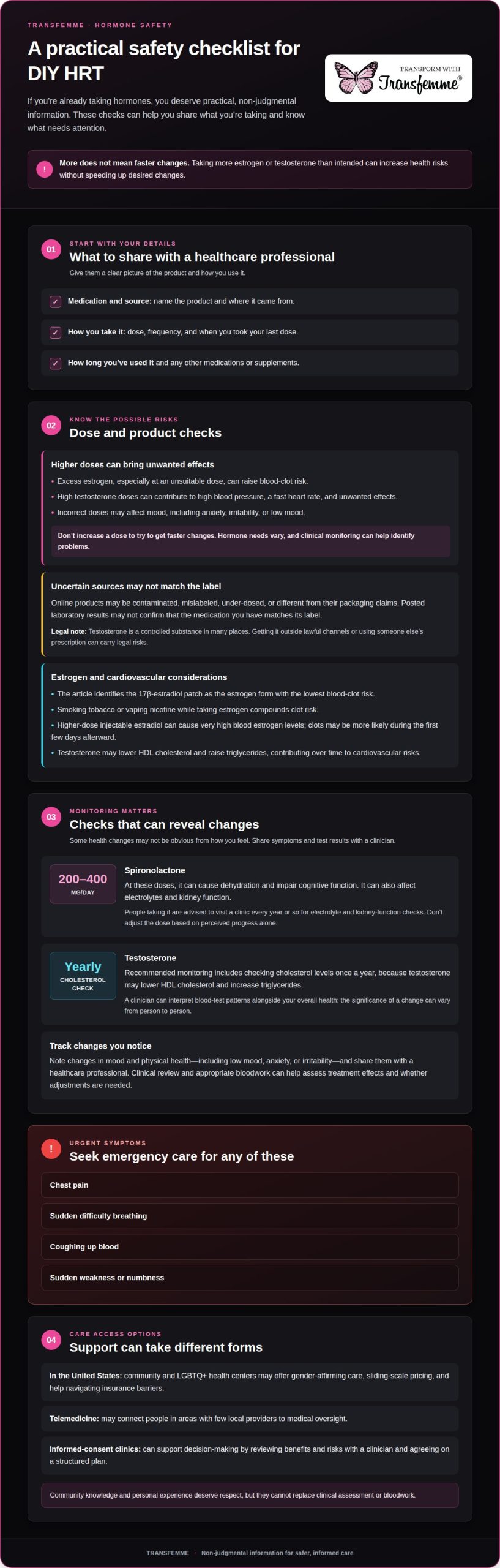
If you’re already taking hormones, tell a healthcare professional what you use and how you take it. Share the dose, frequency, last dose, how long you’ve used it, and any other medications or supplements.
In the United States, community and LGBTQ+ health centers may offer gender-affirming care, sliding-scale pricing, and help navigating insurance barriers. Telemedicine may also connect people in areas with few local providers to medical oversight.
Risks of Excess Estrogen or Testosterone
Taking more estrogen or testosterone than intended can increase health risks without speeding up desired changes. Excess estrogen, particularly at an unsuitable dose, can raise the risk of blood clots. High testosterone doses can contribute to high blood pressure, a fast heart rate, and unwanted effects. Incorrect doses may also cause mood changes, anxiety, irritability, or low mood. Don’t increase a dose to try to get faster changes: hormone needs vary, and clinical monitoring helps identify problems.
Uncertain Medication Sources
Uncertain medication sources are sellers or supply routes where a product’s contents and strength may be unreliable. Online products may be contaminated, mislabeled, under-dosed, or different from their packaging claims. Even posted laboratory results may not show that the medication you have matches its label. Testosterone is a controlled substance in many places, so obtaining it outside lawful channels or using someone else’s prescription can carry legal risks. Share the product, dose, and source details with a healthcare professional.
Blood Clots and Cardiovascular Risks
Estrogen-related clot risk depends partly on the hormone form and dose. The 17β-estradiol patch is identified as the estrogen form with the lowest blood-clot risk. Smoking tobacco or vaping nicotine while taking estrogen compounds that risk. Higher-dose injectable estradiol can cause very high blood estrogen levels, with clots potentially more likely during the first few days afterward. Testosterone may lower HDL cholesterol and raise triglycerides, contributing over time to cardiovascular risks. Seek emergency care for chest pain, sudden difficulty breathing, coughing up blood, or sudden weakness or numbness.
Anti-androgen side effects and monitoring
Anti-androgens reduce or block some effects of androgens, but their effects still need monitoring. Spironolactone, for example, can cause dehydration and impair cognitive function at doses of 200-400 mg/day. These effects may interfere with daily activities, so a dose should not be adjusted based on perceived progress alone. A clinician can review side effects alongside the medicine’s dose and administration.
Monitoring can help identify changes that aren’t obvious from how you feel. People taking spironolactone are advised to visit a clinic every year or so to check electrolytes and kidney function. Spironolactone can affect both, and blood tests give clinicians information that symptoms alone may not provide. Share the dose and frequency you take, along with any other medications and supplements.
Testosterone also calls for ongoing health checks. Recommended monitoring includes checking cholesterol levels once a year, because testosterone may lower HDL cholesterol and increase triglycerides. Over time, these changes can contribute to cardiovascular risks. Blood tests help track the pattern, while a clinician can interpret the results alongside your overall health and treatment. The significance of a change can vary from person to person.
Evidence about DIY hormone administration has limits: a 2022 review identified no peer-reviewed studies on the effectiveness of self-administered gender-affirming hormones. That finding doesn’t establish that an individual’s experience is invalid; it means there’s limited research to guide decisions about effectiveness and risks. Incorrect hormone doses can also affect mood, including low mood, anxiety, or irritability. Note changes in mood and physical health, then share them with a healthcare professional. Clinical review and appropriate bloodwork can help assess treatment effects and whether adjustments are needed.
Lay expertise and trans agency
DIY hormone therapy often reflects barriers to healthcare, not a lack of concern for personal safety. Transgender people in the United States may face medication costs, difficulty accessing providers, or mistrust of medical systems. Long waiting lists, discrimination, limited access to gender specialists, and inconsistent provider knowledge can make affirming hormone care difficult to reach. These pressures may leave someone weighing imperfect options while seeking changes that fit their identity.
Community knowledge can help people make sense of a confusing system. Researchers interviewed 36 transgender people in the United States who had practiced DIY HRT. Participants described it as community-driven, accessible, and empowering, with support from online forums and mutual aid. Shared experience can help someone understand practical questions about treatment, prepare for conversations with health care professionals, and feel less isolated. That expertise deserves respect, even though it cannot replace clinical assessment or bloodwork.
Trans agency means having a voice in decisions about your body and goals. Gender identity and desired changes don’t always fit a binary model, and hormone therapy is not one universal pathway. Informed-consent clinics can support decision-making by reviewing benefits and risks with a clinician and agreeing on a structured plan. Telemedicine may provide medical oversight where local transgender health services are limited.
Community and LGBTQ+ health centers may provide gender-affirming services, social support, sliding-scale pricing, and help navigating insurance barriers. These options can make care more accessible, though availability and individual needs vary. If you’re using DIY hormones, community knowledge can help you describe your experience, but give a healthcare professional clear details about what you take. Combining your lived experience with medical review can help guide decisions that respect your goals and address health risks.
Red blood cell increases and blood thickening
Testosterone can increase red blood cells, which may make blood thicker. This is worth monitoring during affirming hormone therapy, including treatment taken without a prescription. The increase may not be obvious from your appearance or day-to-day feelings. Bloodwork gives a clearer picture than symptoms alone, and clinicians can consider results alongside your dose, administration method, and overall health.
For people taking testosterone, the monitoring guidance recommends checking cholesterol once a year. Red blood cell monitoring is a separate concern: ask a healthcare professional how bloodwork fits your treatment, especially if you’re self-administering hormones. Share the product, amount, schedule, and duration of use. Those details help a clinician interpret results and understand whether changes may relate to testosterone or other factors.
Blood donation is sometimes recommended to reduce risks associated with increased red blood cells. If you’re concerned about increased red blood cells, ask a healthcare professional about appropriate ways to address them. Donation isn’t a substitute for monitoring: it doesn’t tell you what your red blood cell levels are or why they changed. Discuss this recommendation with a clinician in the context of your health and gender-affirming care.
Taking hormones to support gender expression or sexual wellbeing is a personal decision; monitoring can make physical effects easier to track. A prescription and clinical follow-up can support regular assessment, but barriers to affirming care may complicate access. If you’re using testosterone without medical supervision, tell a healthcare professional rather than withholding that information out of concern about judgment. Share product details and any recent bloodwork, and ask how often they recommend checking red blood cells. This conversation can connect your transition goals with a practical plan to track health changes.
Transfemme
Transfemme offers non-surgical products for people seeking feminine features, including breast enhancement, softer skin, and reduced body hair. If those goals are part of your personal journey, its options include the Boobie Bundle, ALLYOU2GO Bundle™, Transfemme® Pills, and Transfemme Cream Pack. These products are distinct from prescription hormone replacement therapy and don’t replace medical assessment or monitoring. If you’re already taking estrogen or testosterone, keep discussing your hormone use and health checks with a healthcare professional; don’t treat these products as a way to adjust hormone doses or manage side effects. Transfemme may be relevant when you’re exploring non-surgical support for appearance goals alongside appropriate health care. For questions about these offerings and how they relate to your goals, contact Transfemme.
Choose a next step that fits your goals
Understanding why DIY HRT can be dangerous can help you make informed decisions, but your path remains personal. Separate the support you need for hormone-related health from the appearance goals you want to explore—whether that involves at-home care or consulting professional aesthetic providers like ZABÉ Cosmetic for non-invasive clinical enhancements. If you’re taking hormones, keep your health information available for a clinician and make changes only with appropriate medical guidance.
For non-surgical support with feminine features, Transfemme offers products that may complement, but do not replace, clinical hormone care. Consider what matters most to you, whether that’s breast enhancement, softer skin, or reducing body hair, and choose a next step that reflects those priorities.
Contact Transfemme for support as you consider options that align with your goals. You deserve information and care that respect your identity and help you move forward at your own pace.
Frequently Asked Questions
Is HRT safe?
HRT can be used with medical guidance, but safety depends on the hormones, dose, health history, and monitoring. There isn’t one dose or approach that suits everyone. A clinician can review your goals and health factors, then assess how treatment affects you over time. If you’re considering hormones, discuss potential benefits and risks before starting or changing a regimen.
Can you get blood tests if you’re doing DIY HRT?
Yes, you can seek blood tests while using DIY HRT. Be open with the clinician or laboratory staff about what you’re taking so they can interpret results in context. Bring the medication packaging or clear product details, if available, and note how you take it. Blood tests provide useful measurements, but a clinician’s review helps relate those results to your health and treatment.
What are the risks of DIY HRT?
Risks include taking an unsuitable or excessive dose, using medication with uncertain contents, and missing health changes without monitoring. Estrogen can raise blood-clot concerns, while testosterone can affect cholesterol and red blood cell levels. Mood changes may also occur. Understanding why DIY HRT can be dangerous means considering both the medication and the lack of individualized medical oversight, not blaming people seeking care.
What is DIY HRT?
DIY HRT means using hormones without a prescription, medical guidance, or routine monitoring. Examples include buying hormones from an unregulated online source, using someone else’s prescription, or changing a dose without clinical support. People may choose this route when affirming care is difficult to access. The term describes how treatment is obtained or managed, not a person’s identity or reason for seeking hormones.
When should I get medical help while taking HRT?
Seek emergency medical attention for chest pain, sudden difficulty breathing, coughing up blood, or sudden weakness or numbness. These symptoms can signal a serious problem and should not wait for a routine appointment. For other new or concerning changes, contact a healthcare professional and explain what hormones you take. If symptoms feel severe or life-threatening, use emergency services rather than waiting for advice.
What does DIY hormone replacement therapy (HRT) mean?
DIY hormone replacement therapy is another name for using hormones without a prescription, medical guidance, or routine monitoring. It can involve sourcing medication yourself, taking someone else’s prescription, or adjusting a regimen independently. The key distinction is the absence of clinical oversight, not whether someone uses estrogen or testosterone. If you’re using hormones this way, sharing that information with a healthcare professional can support safer care.