


The best diet for MTF feminization isn’t a special hormone-focused meal plan. There’s no specific diet to follow when starting HRT; a balanced pattern built around nourishing foods is a practical foundation. Estrogen and spironolactone can make food choices feel more consequential, so it’s understandable to want clear guidance about what to eat and what to approach carefully.
Food can support your general health during transition, but it can’t direct where your body stores fat or replace prescribed hormone care. This guide covers food quality, carbohydrates, fiber, and calorie needs without restrictive rules or promises about particular foods.
You’ll also find a straightforward overview of common dietary considerations while taking estrogen and spironolactone, including why balanced choices matter more than chasing a “feminizing” ingredient. The goal is to help you feel informed and at ease as you build an eating routine that suits your needs.
Key Takeaways
- Build meals around varied whole foods, including vegetables, fruit, grains, and protein, rather than seeking a special HRT diet.
- Choose fiber-rich carbohydrate sources to make meals more satisfying and support a steady, balanced eating pattern.
- Pay attention to added sugars, saturated fat, sodium, and alcohol without relying on extreme restrictions.
- Treat calorie needs as personal; focus on food quality and sustainable habits instead of copying someone else’s weight-loss target.
Carbohydrates, fiber, and blood sugar
No specific diet has been shown to increase estrogen or improve feminization. During HRT, choose carbohydrates for nourishment and everyday energy, not to direct hormone-related changes.
Build meals around fiber-rich carbohydrates, such as oats, beans, lentils, berries, and whole-grain bread. Pair them with protein foods, such as eggs or lentils, and vegetables, such as carrots or leafy greens. Oatmeal with berries or beans with brown rice combines carbohydrates with fiber-rich foods. These options add variety without requiring a low-carbohydrate plan or cutting out an entire food group.
Feminizing hormone therapy can shift fat distribution toward the hips and buttocks, with changes commonly unfolding over the first few years. Weight gain or loss can affect overall body shape, but food choices can’t determine where fat accumulates. Avoid restrictive eating to try to force a particular distribution.
Soy foods and flaxseeds contain phytoestrogens, but eating them isn’t a dependable way to increase estrogen or control breast growth. Some herbal remedies and supplements may have uncertain ingredients or effects. Don’t assume a product is safe just because it’s labeled natural. Discuss an herbal supplement’s ingredients with a healthcare professional before taking it alongside HRT.
Blood sugar concerns are another reason to tailor meals rather than follow a trend. If you have diabetes, take medication that affects blood sugar, or notice concerning symptoms, discuss your eating pattern with your clinician. A registered dietitian can help adapt meals to your preferences, access to food, and health needs.
Consult a doctor or registered dietitian if you’re considering supplements, managing a health condition, or struggling to eat consistently. Bring a list of the foods, supplements, and medications you use, including estrogen and spironolactone. This can help them discuss your nutrition and treatment together.
Healthy eating patterns during transition
The 2020-2025 Dietary Guidelines for Americans describe a healthy routine with vegetables, fruits, grains, protein foods, and dairy or lactose-free alternatives. These groups offer a flexible framework, not a transition-specific menu. A meal of salmon, spinach, brown rice, and yogurt, for example, combines several groups without centering food around a promised change in appearance.
Feminizing hormone therapy can change body composition, tending to increase body fat and decrease muscle. Weight gain is also a common side effect; some people may gain a few pounds, while others gain more. Rather than responding with severe restriction, aim for regular meals that include a mix of food groups. Lentils provide protein and fiber and can replace meat in many recipes, such as lentil chili or shepherd’s pie.
Nutrition matters beyond appearance goals. Hormone therapy may affect cholesterol, blood pressure, and bone mineral density, and nutrition can play an important role in these areas. For heart-supportive variety, include vegetables, fruit, grains, and protein foods instead of relying heavily on one type of food. For bone health, include dairy or lactose-free alternatives in a varied routine. These eating patterns support general health; they don’t direct where body fat settles.
Make your eating pattern workable in daily life. A packed lunch might combine a grain, a protein food, and vegetables; at dinner, you could use lentils instead of meat in a familiar recipe. If you eat dairy, include it where it suits your meals; otherwise, lactose-free alternatives can fit the same broad food-group framework. The best diet for MTF feminization isn’t a rigid formula. It’s a sustainable pattern that respects your preferences and supports your health while your body responds to HRT.
Limiting added sugars, saturated fat, sodium, and alcohol
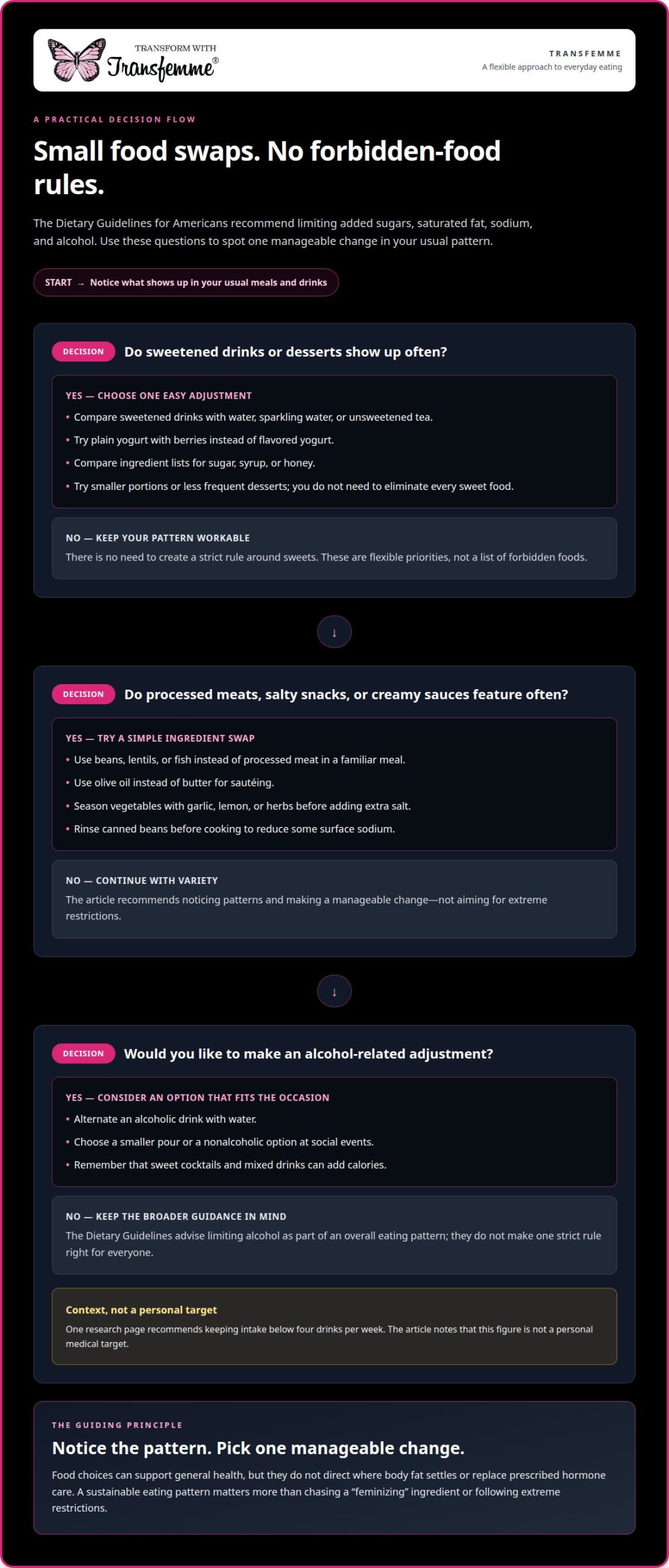
The Dietary Guidelines for Americans recommend limiting added sugars, saturated fat, sodium, and alcohol. These are flexible priorities, not a reason to label foods forbidden. Start by noticing where they appear in your usual meals. Sweetened coffee, packaged desserts, salty snacks, processed meats, and creamy sauces can add up over the day. Notice the pattern, then choose one manageable change.
To reduce added sugar, compare sweetened drinks with water, sparkling water, or unsweetened tea. If you enjoy flavored yogurt, try plain yogurt with berries. Check ingredient lists for words such as sugar, syrup, or honey, and compare similar products. You don’t need to eliminate every sweet food; smaller portions or less frequent desserts can make your routine easier to maintain.
Simple ingredient swaps can also reduce saturated fat and sodium. Try beans, lentils, or fish instead of processed meat in a familiar meal. Use olive oil instead of butter for sautéing, and season vegetables with garlic, lemon, or herbs before adding extra salt. Canned beans are convenient; rinsing them before cooking can reduce some surface sodium.
Alcohol deserves separate consideration. One research page recommends keeping intake below four drinks per week, but that figure isn’t a personal medical target. Alcohol can also add calories, especially in sweet cocktails or mixed drinks. Consider alternating an alcoholic drink with water, choosing a smaller pour, or selecting a nonalcoholic option at social events. The Dietary Guidelines offer broader advice to limit alcohol, added sugars, saturated fat, and sodium as part of an overall eating pattern, rather than expecting one strict rule to suit everyone.
Calorie counting and food quality
There isn’t one calorie, protein, or fat target that fits every transfeminine person. Daily energy needs depend on factors such as body size, activity, health, and goals. Protein and fat needs vary, too, so don’t treat a number from someone else’s plan as your personal prescription.
Online weight-loss stories can make very low calorie targets seem typical. Forum participants have described eating around 1,000 kilocalories daily, or targeting 1,500-1,600 kilocalories. Those are individual reports, not general recommendations. A target that doesn’t meet your needs can make a balanced, sustainable routine harder to maintain.
If calorie tracking feels useful, use it to notice patterns, not as a measure of success. For example, briefly record meals and note whether they include a protein food, a source of fat, and vegetables or fruit. Eggs with avocado and vegetables, or lentils with olive oil and greens, can help you assess variety without fixating on a daily total.
Food quality matters alongside energy intake. Choose protein foods such as eggs, beans, lentils, fish, or tofu, and add fats from foods such as nuts, seeds, or olive oil. Pair them with grains, vegetables, or fruit to make satisfying meals. A burger, for instance, can fit into a varied pattern when balanced with vegetables and other nourishing foods throughout the day.
Instead of copying a restrictive diet, consider whether your approach supports regular meals and energy for daily activities. If tracking causes distress, or a weight-loss plan feels difficult to sustain, focus on food variety and discuss your needs with a registered dietitian. For a separate option in your feminization journey, explore Transfemme® Pills.
There is no single protein, fat, or calorie target for every transfeminine person; needs vary with body size, activity, health, and goals. Include nourishing protein and fat foods in varied, satisfying meals, and consider discussing your individual needs with a registered dietitian.
Transfemme
Transfemme offers products for people seeking additional support with feminine appearance goals alongside their broader transition journey. Its range includes Transfemme® Pills, creams, and bundles such as the Boobie Bundle and ALLYOU2GO Bundle™. These offerings are separate from food choices: they don’t replace a balanced eating pattern or prescribed hormone care.
If you’re considering a product alongside your nutrition routine, focus on what you want support with, such as breast appearance, skin softening, or body hair reduction. The Transfemme Cream Pack and bundles bring together offerings for feminization goals, while the pills provide a different format. Choose based on the kind of support you’re seeking, not as a substitute for individualized nutrition advice.
Explore Transfemme’s feminization creams, pills, and bundles to find the product format that aligns with your goals.
Choose a next step that feels sustainable
Your eating routine should fit your life, not an idealized plan that leaves little room for pleasure, culture, or changing needs. Instead of aiming for perfect meals, choose a steady habit you can realistically continue. That might mean preparing a favorite meal more often or enjoying foods you like without treating them as a setback.
The best diet for MTF feminization supports your well-being without turning food into a way to control how your body changes. Let your priorities guide what comes next, whether that means refining your everyday routine or exploring other forms of support for your personal goals.
If you have questions about how Transfemme’s offerings fit your goals, Contact Transfemme with your questions. You deserve an approach that respects your pace and supports the person you’re becoming.
Frequently Asked Questions
Are there specific dietary risks for MTF individuals on estrogen and spironolactone?
There isn’t a single list of foods to avoid for everyone taking estrogen and spironolactone. One practical concern is adding herbal or “feminizing” supplements without reviewing their ingredients alongside your medications. Keep the product label and ingredient list available for a medication review, especially if you use several supplements or have a health condition that affects your diet.
How does hormone replacement therapy (HRT) affect nutritional requirements?
HRT doesn’t create one universal protein, fat, or calorie prescription. Feminizing therapy can affect body composition, while cholesterol, blood pressure, and bone mineral density are also health areas to keep in view. If your appetite, activity, or weight changes, consider whether your usual meals still meet your needs. Your nutrition approach should reflect your health, preferences, and daily routine.
Should You Count Calories?
Calorie counting is optional, not a requirement for feminizing HRT. It may help some people notice eating patterns, but a calorie target copied from an online post may not suit your body or routine. If tracking becomes stressful, focus instead on whether your meals are regular and varied. For example, notice how often you include a protein food or vegetables.
What does feminizing hormone therapy do, and what role does diet play?
Feminizing hormone therapy can shift fat distribution toward the hips and buttocks and change the balance of body fat and muscle. Diet supports general nourishment, but it can’t select where fat accumulates or replace hormone therapy. Changes develop over time, so don’t treat a particular food as a way to speed up or target a specific physical change.
What nutrition guidelines support health during feminizing hormone therapy?
Follow a varied eating pattern that includes vegetables, fruits, grains, protein foods, and dairy or lactose-free alternatives. For a practical meal, combine a grain with beans or fish and vegetables, then adjust the ingredients to your preferences and access. Eating regularly across these food groups offers a flexible framework without requiring a special transition diet or strict menu.
Which foods or supplements can interfere with estradiol or spironolactone?
Don’t assume a food interaction based on a food’s name alone. Soy and flax are foods containing phytoestrogens, not substitutes for prescribed estradiol. Concentrated herbal products differ from ordinary meals, and their ingredients can vary. Before adding a supplement, share its label with the professional managing your medications so they can review the combination.